Abstract and Document Details
Abstract
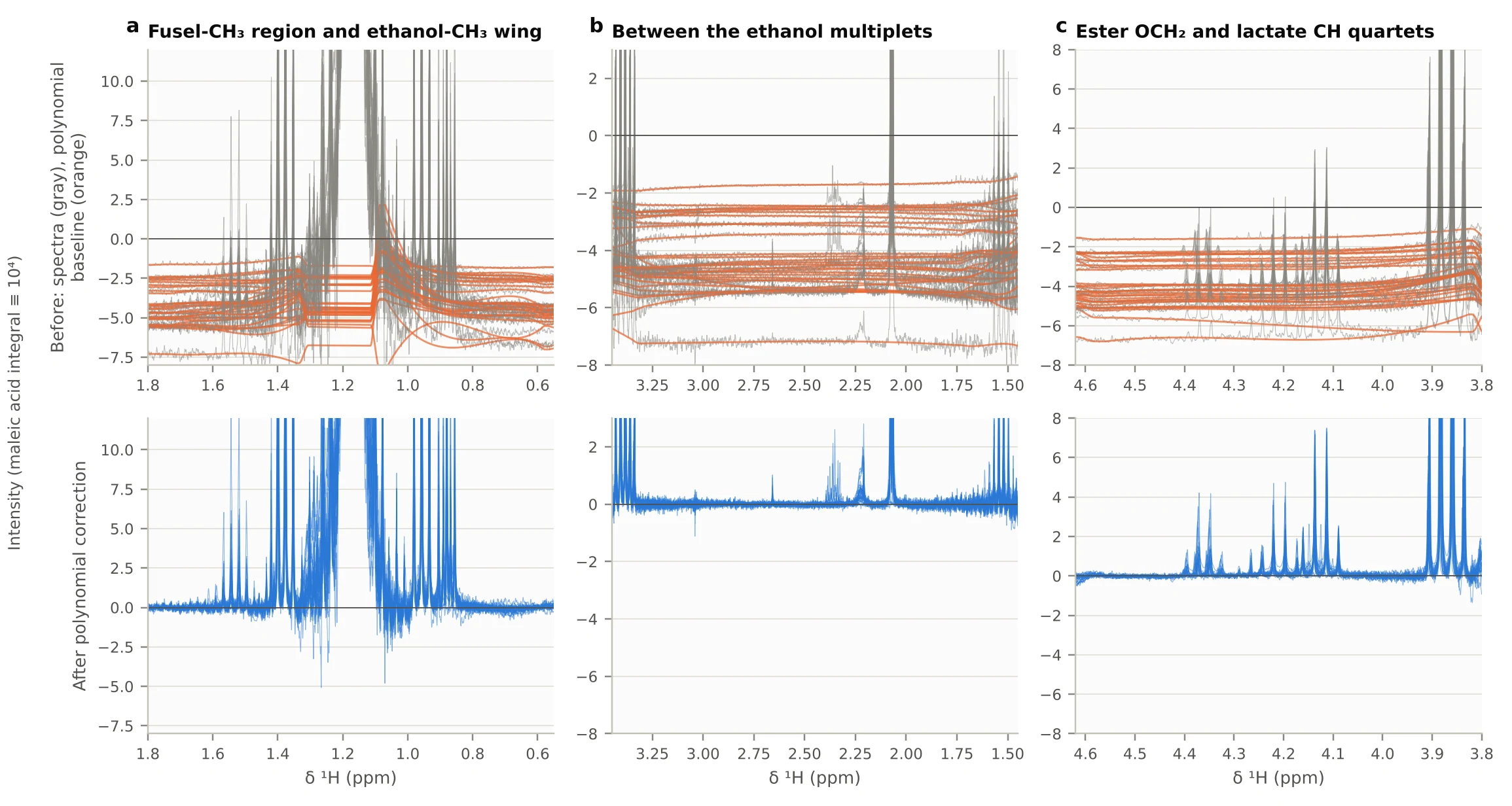
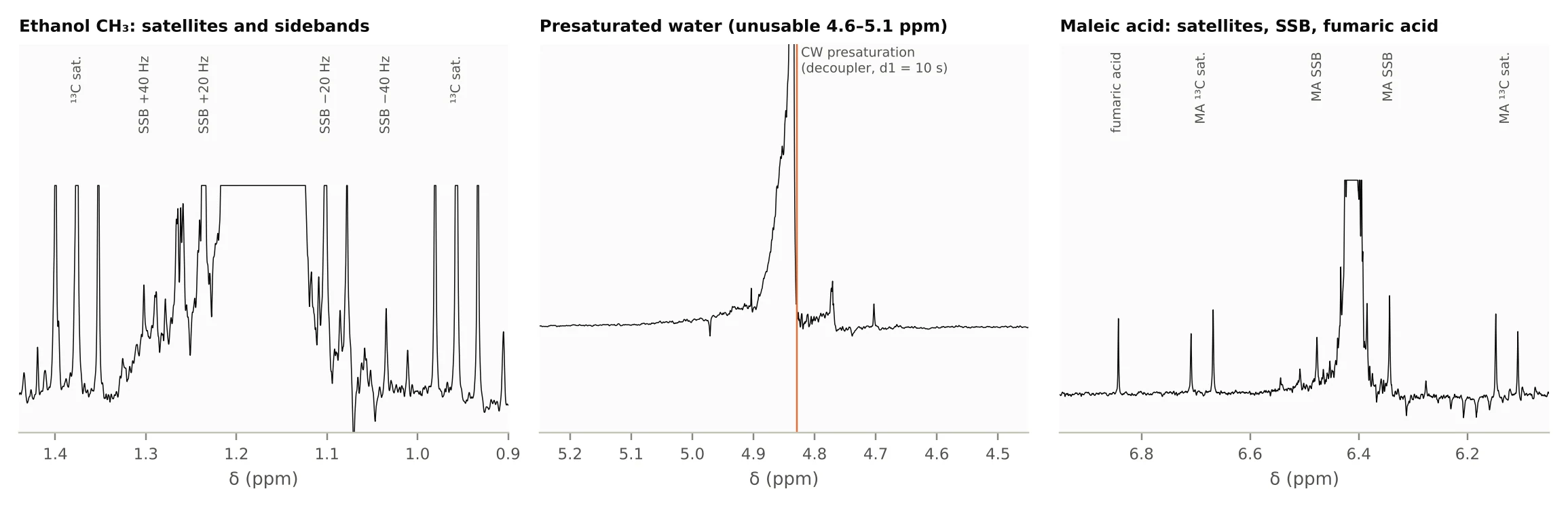
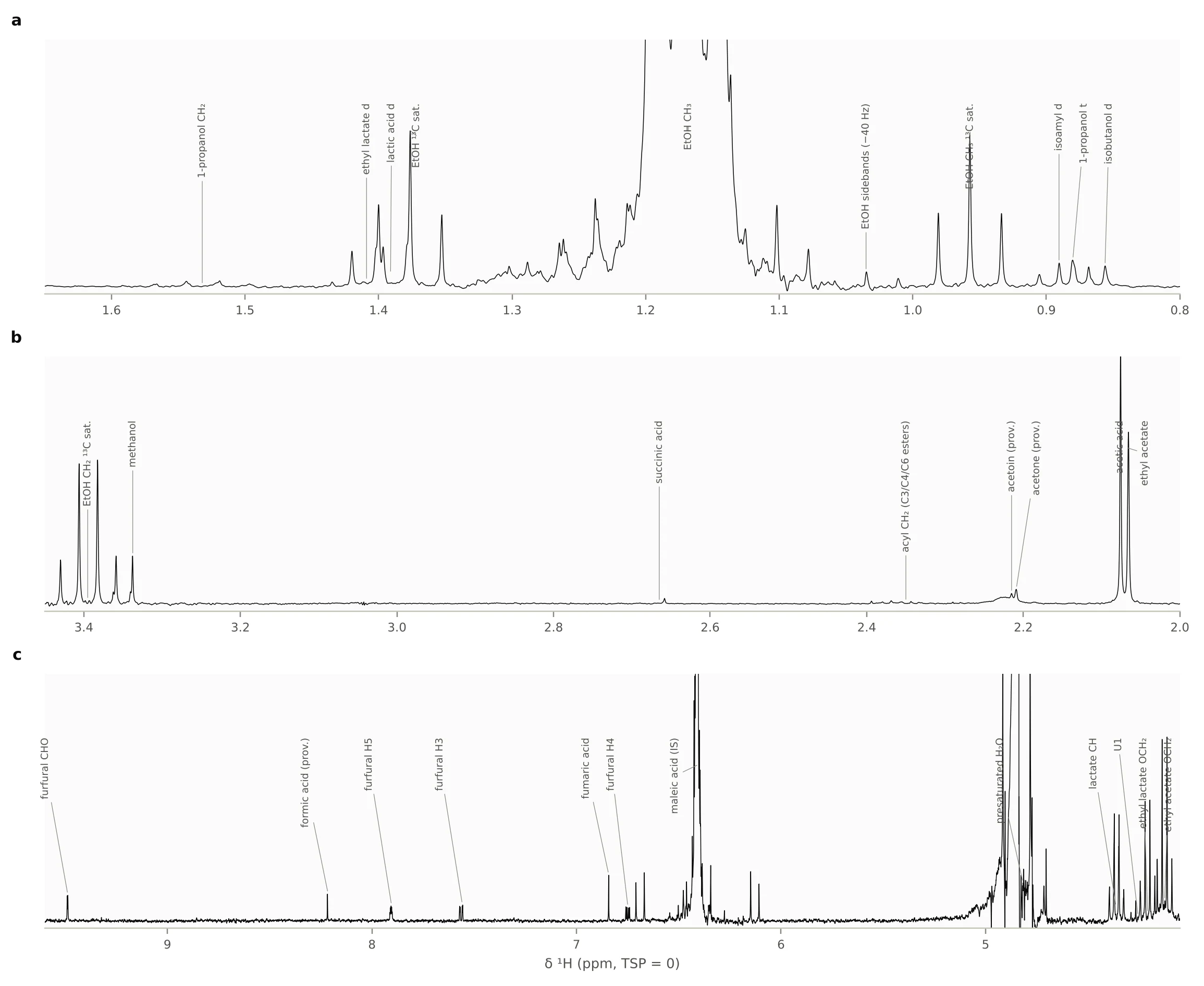
Thirty commercial baijiu, comprising twenty-one Kinmen Kaoliang products from Taiwan, three Kweichow Moutai products and six products of other brands, were re-examined from the original ¹H NMR free-induction decays recorded at 300 MHz in February 2020 with maleic acid as the internal standard, together with FTIR-ATR spectra of the same bottles. The raw data were recovered from the Mnova document and reprocessed uniformly, with an integral-based refinement of the phase, a global Chebyshev baseline supplemented by anchored local polynomials, and variable-projection line-shape fitting of nineteen congener signals. Corrections were applied for off-resonance spillover of the water presaturation (ν₁ = 35.7 Hz, calibrated internally from the ethanol CH₂/CH₃ intensity ratio), for the fumaric-acid isomer present in the standard and for ethyl-ester methyl triplets lying inside the ethanol integration window, and empirical detection limits were derived for every spectrum. In this revision (version 1.1) the absolute scale was further corrected for the way the standard solution had been made, 500 mg of maleic acid dissolved in 5.00 mL of D₂O without being made up to volume, so that each tube received 9.38 mg rather than 10.0 mg, and for partial saturation of the maleic acid signal (T₁ = 6.1 s, 69° pulse, 18.9 s repetition time), the two corrections together lowering all absolute values by the factor 0.912. Concentrations are reported in mg/L of spirit and, preferably, in g/hL of absolute alcohol, a basis that is independent of the amount of standard, of its relaxation and of pipetting and that neither correction changes.
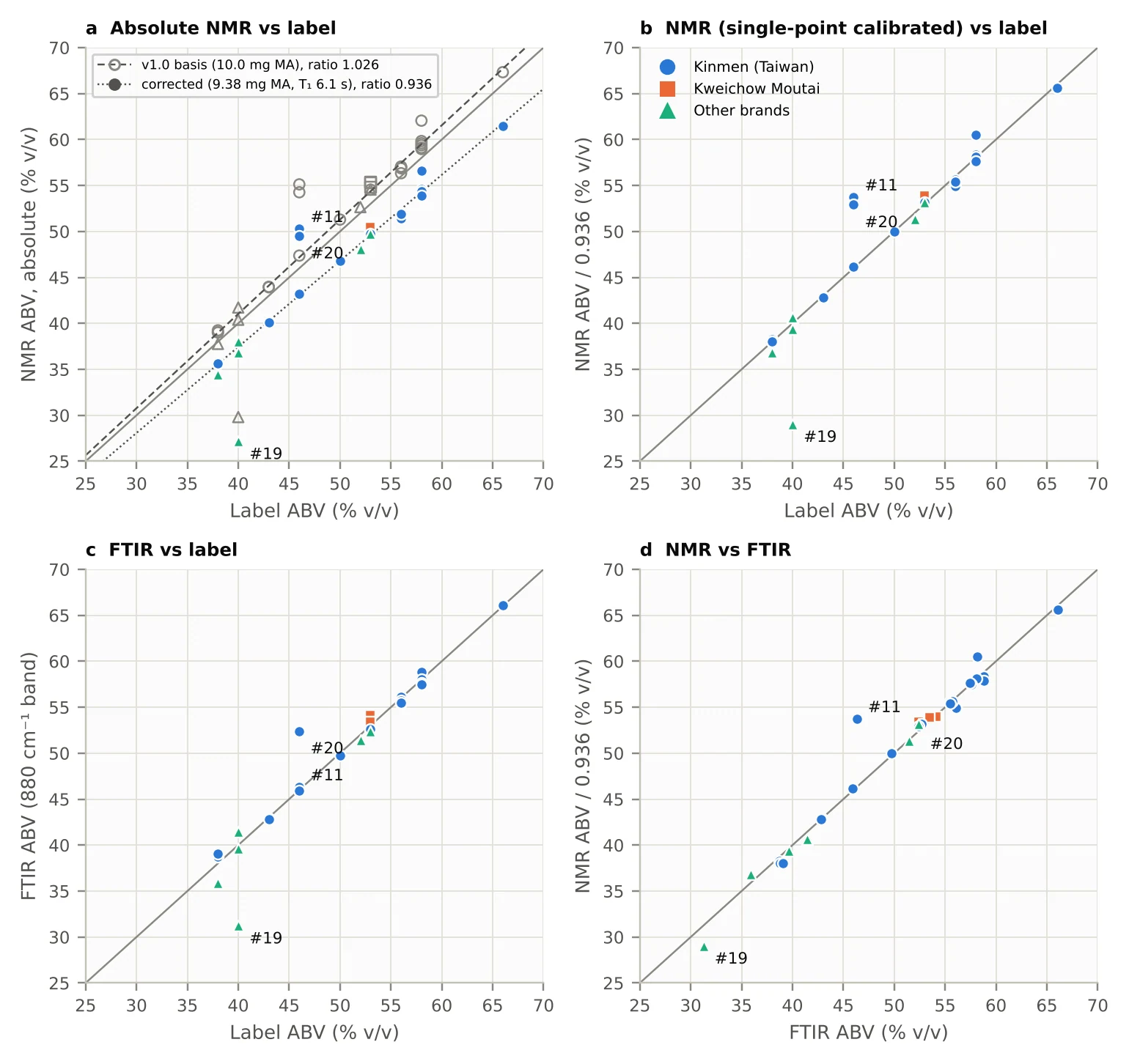
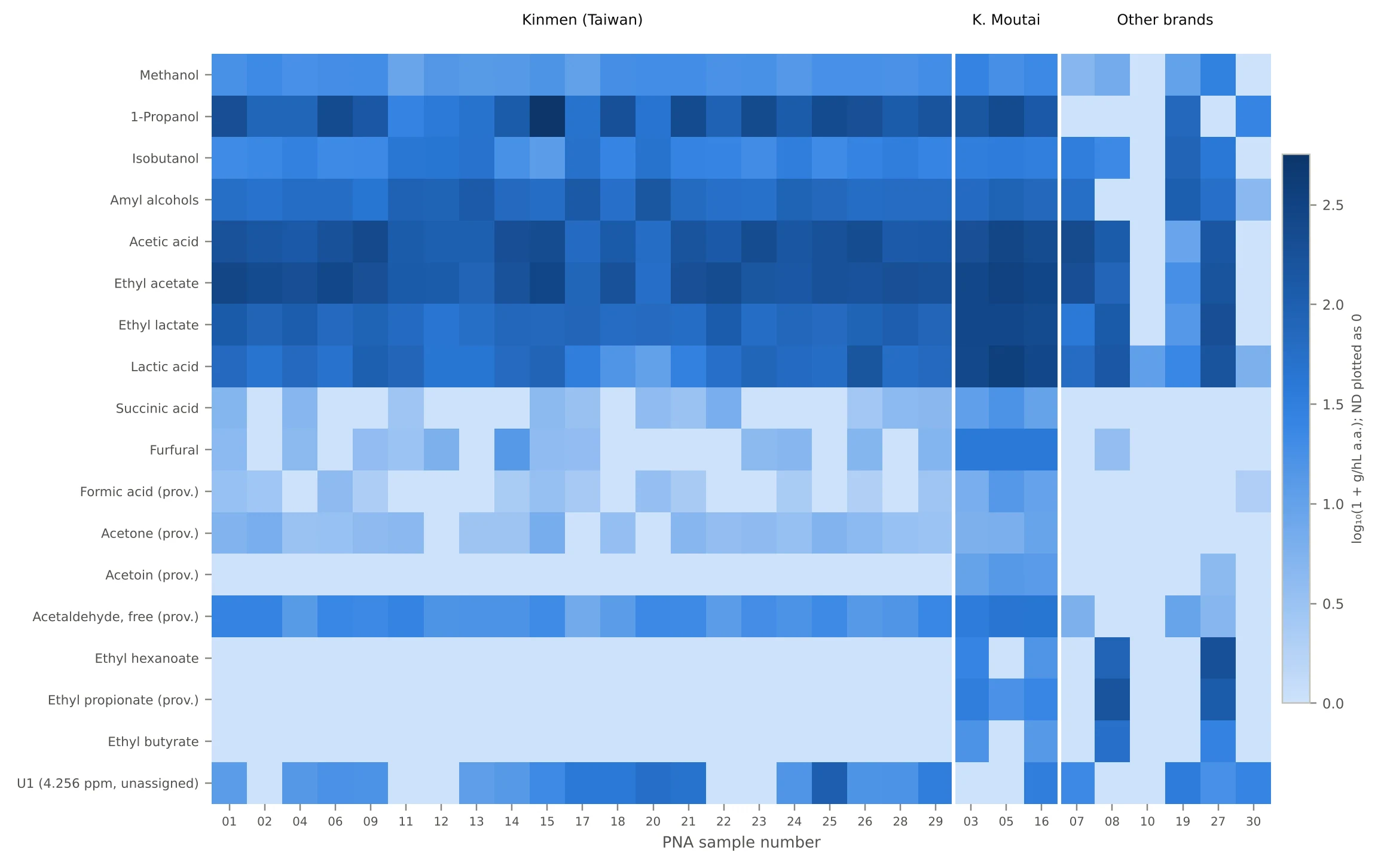
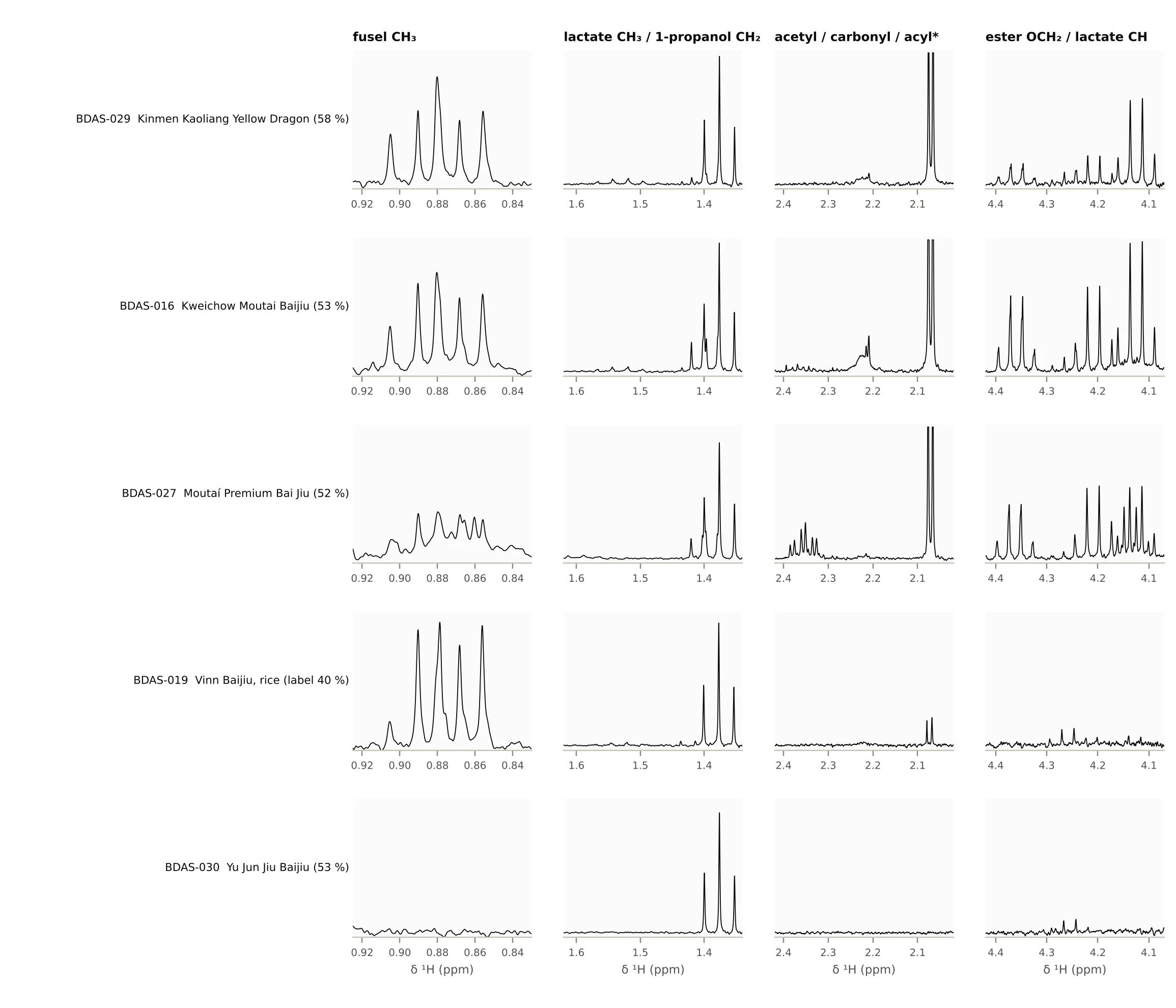
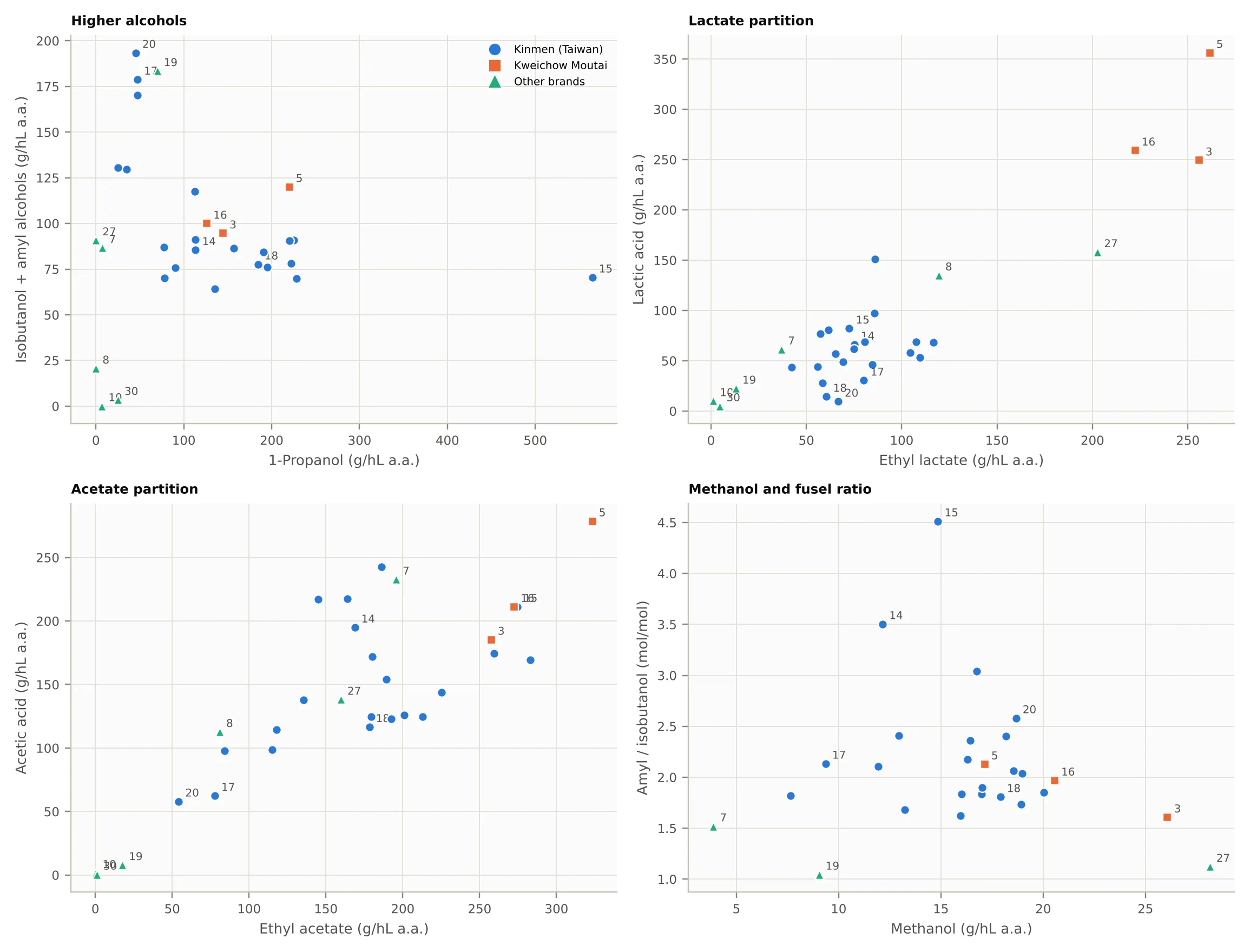
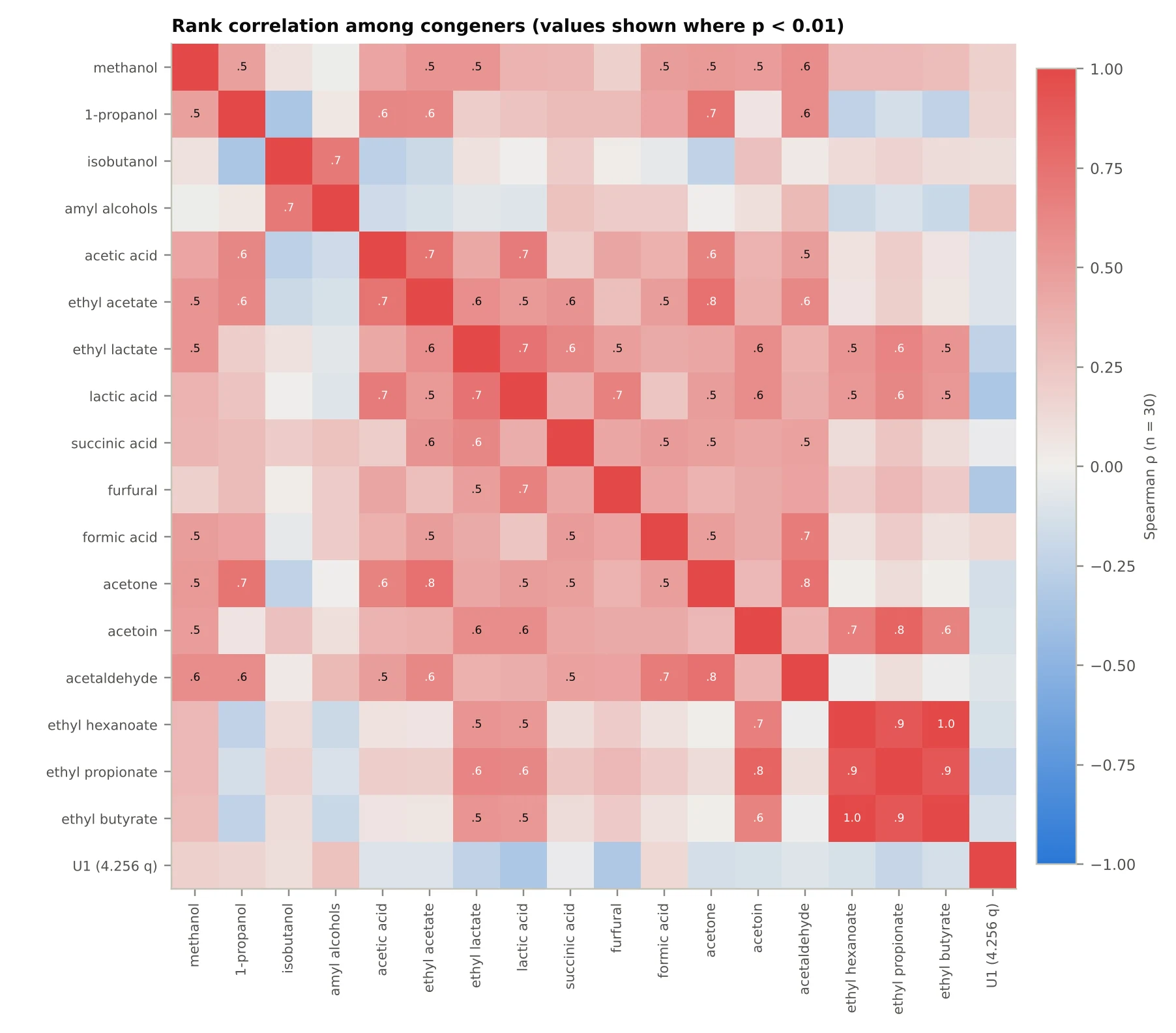
Ethanol measured absolutely against maleic acid ran 2.6 % (relative) above the label in the twenty-seven samples without a documented problem on the nominal basis, but 6.4 % below it after both corrections, which indicates a further, uncorrected error in the volumetric preparation of the tubes, such as under-delivery of the spirit aliquot; after a single-point correction the NMR values reproduced the labels with a root-mean-square deviation of 0.71 % v/v, matching the FTIR 880 cm⁻¹ band (0.73 % v/v). Three discrepancies were resolved: the database label of #20 (46 %) is wrong for a product sold at 53 %, Vinn (#19, labeled 40 %) contained about 30 % ethanol by both techniques and is compromised, and the NMR tube of #11 is anomalous while its FTIR spectrum agrees with the label. The congener chemistry separated the samples by aroma style rather than by brand. The three Kweichow Moutai liquors carried the sauce-aroma signature of very high lactic acid (249–356 g/hL a.a.), ethyl lactate, acetic acid and ethyl acetate together with furfural, succinic acid, acetoin and free acetaldehyde; the Kinmen products showed the light-aroma pattern of ethyl acetate exceeding ethyl lactate with no ethyl hexanoate and a wide spread of 1-propanol (25–565 g/hL a.a.), including a coherent low-propanol, high-amyl-alcohol subgroup; two “Moutai”-named products (#8, #27) instead contained the strong-aroma ester set led by ethyl hexanoate (85 and 182 g/hL a.a.) without the sauce-aroma markers, and two products (#10, #30) were nearly free of congeners, a profile consistent with neutral spirit. Methanol never exceeded 28.1 g/hL a.a., below the GB 2757-2012 limit of 60 g/hL a.a. for grain spirits.
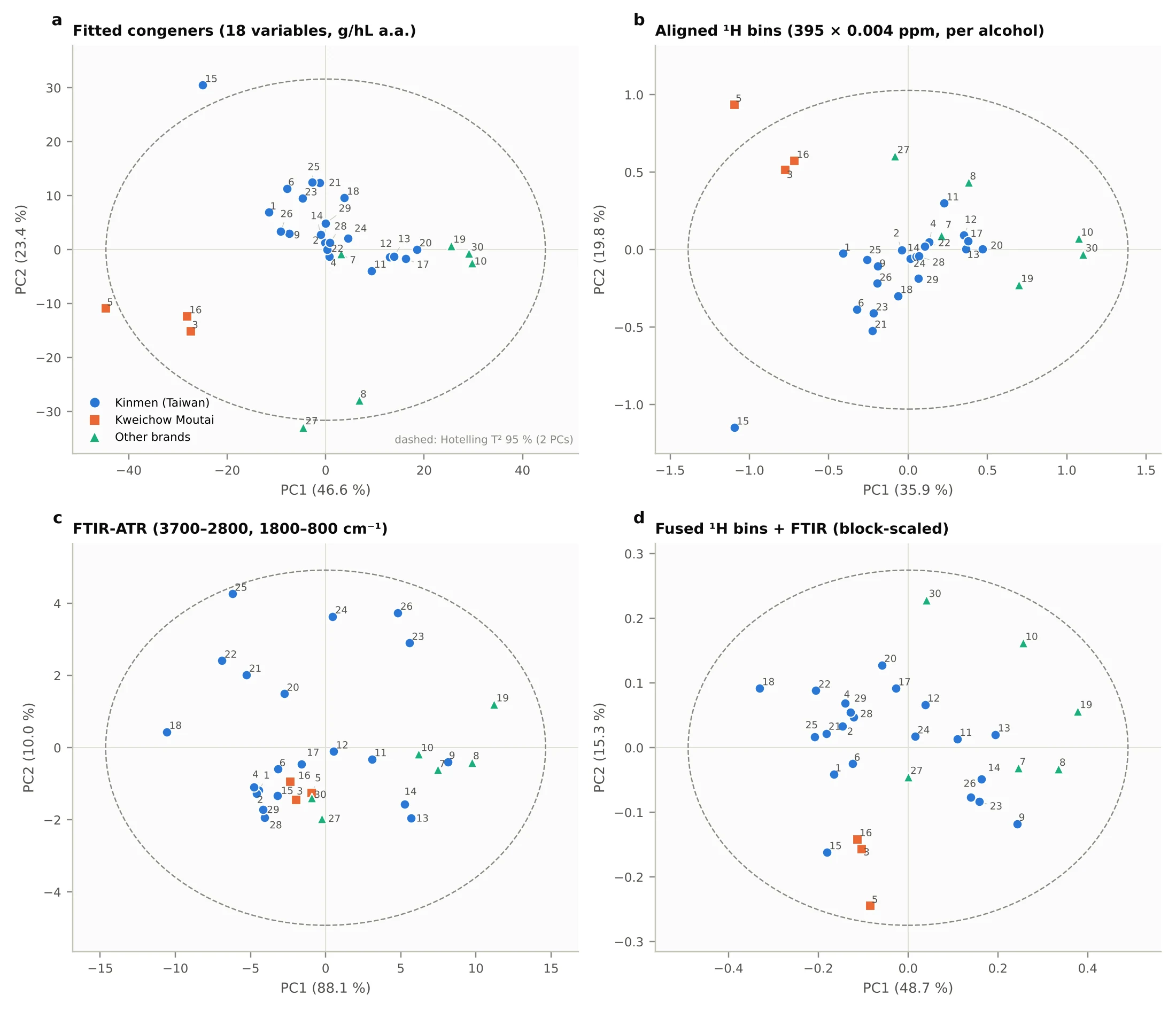
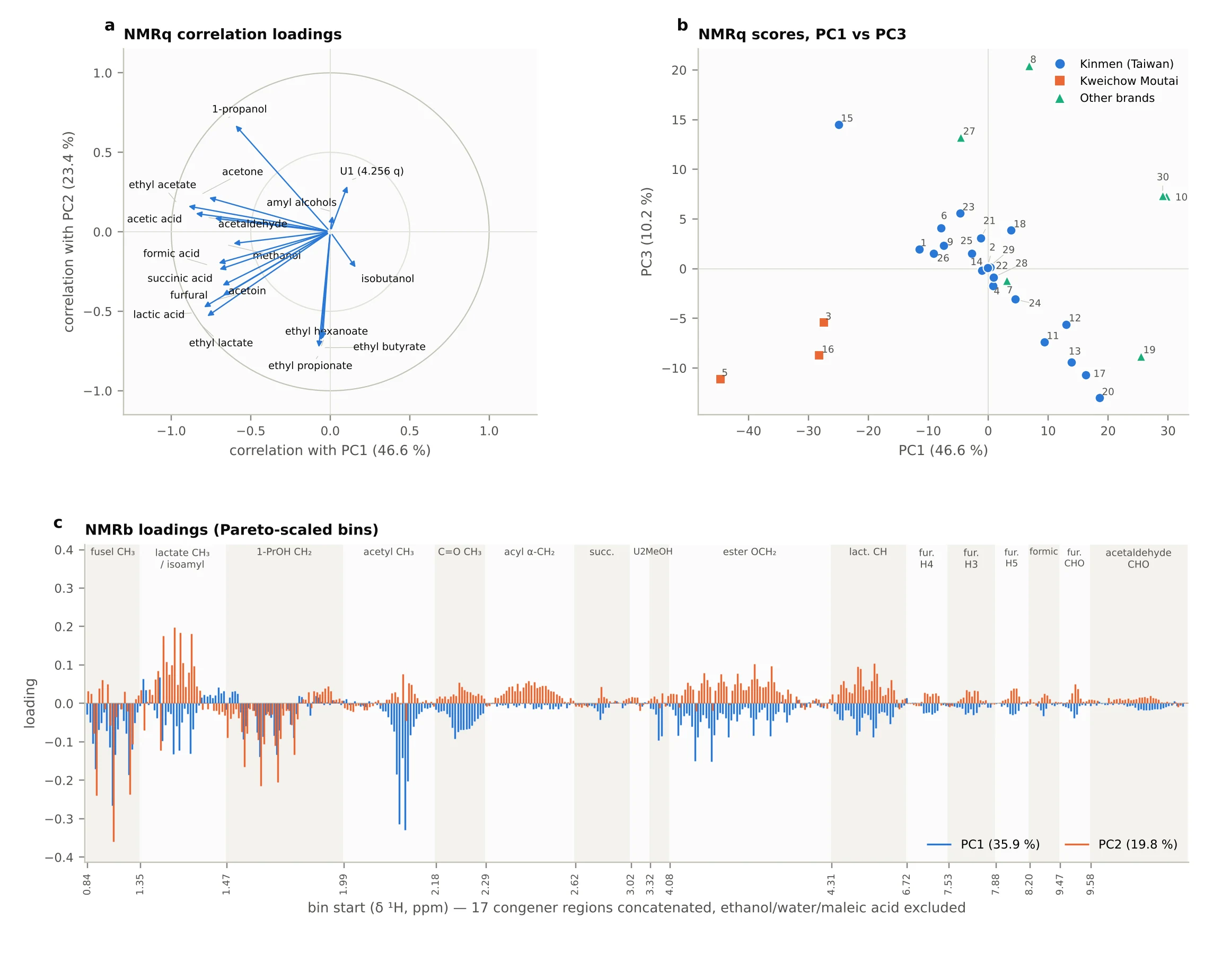
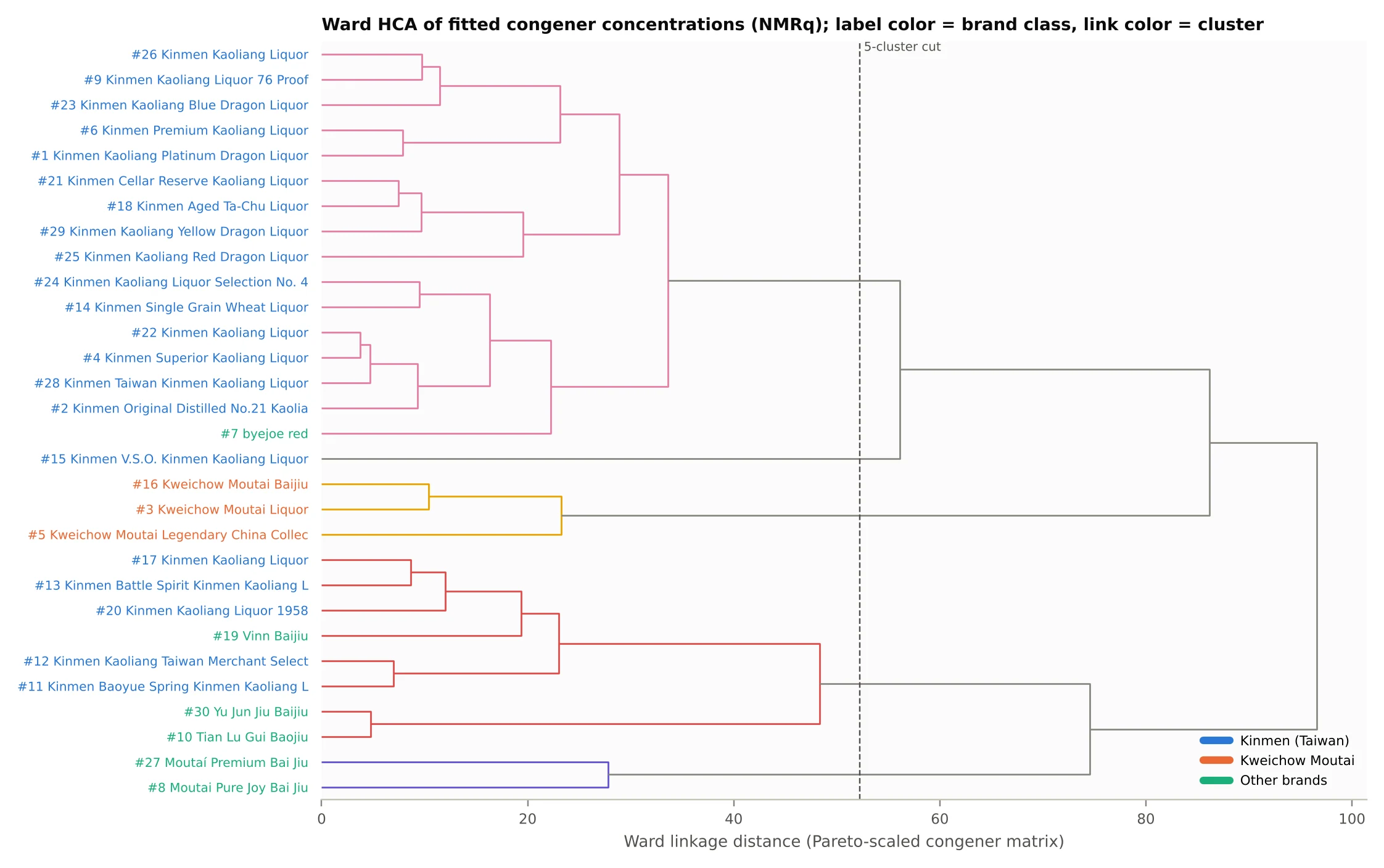
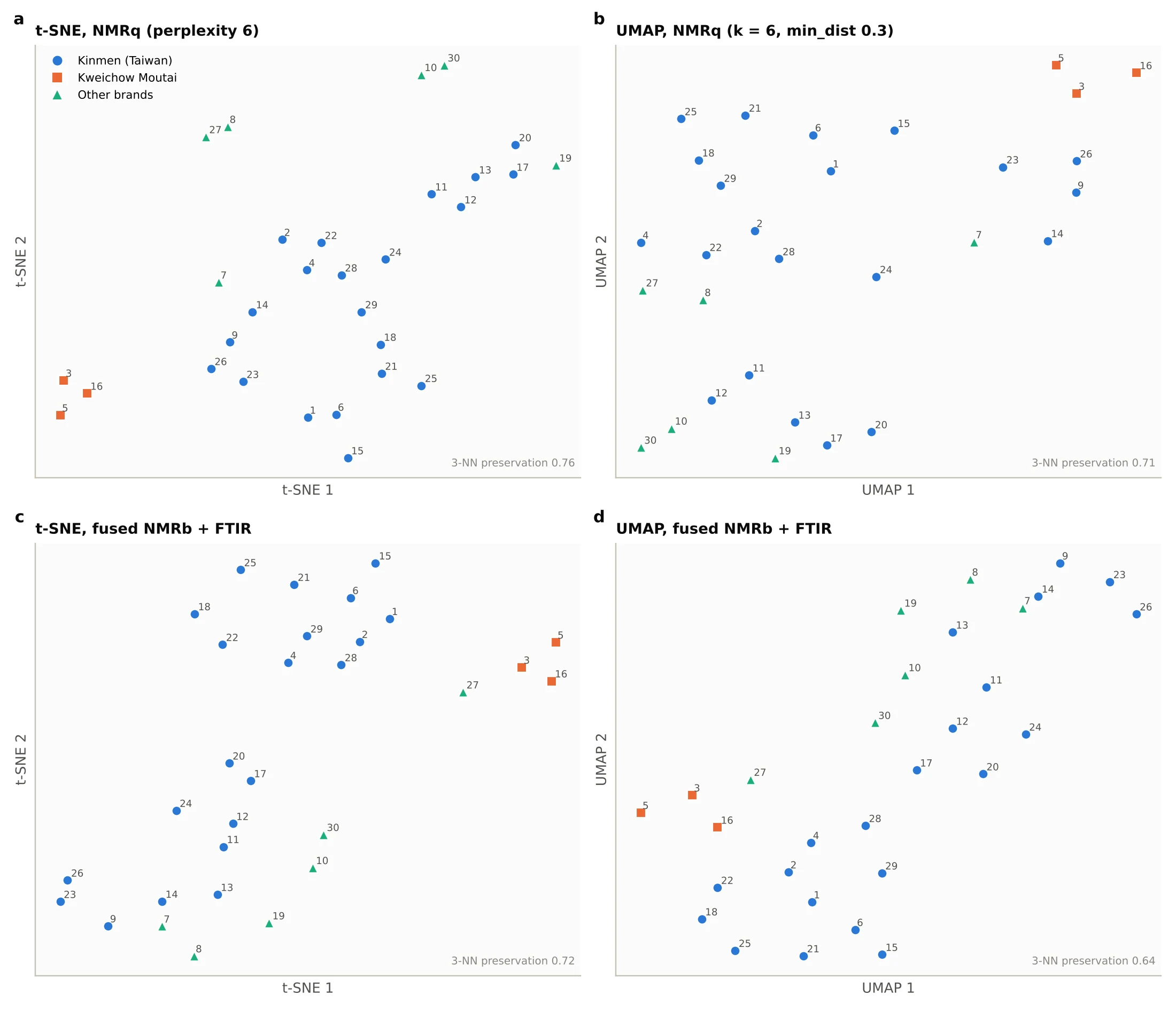
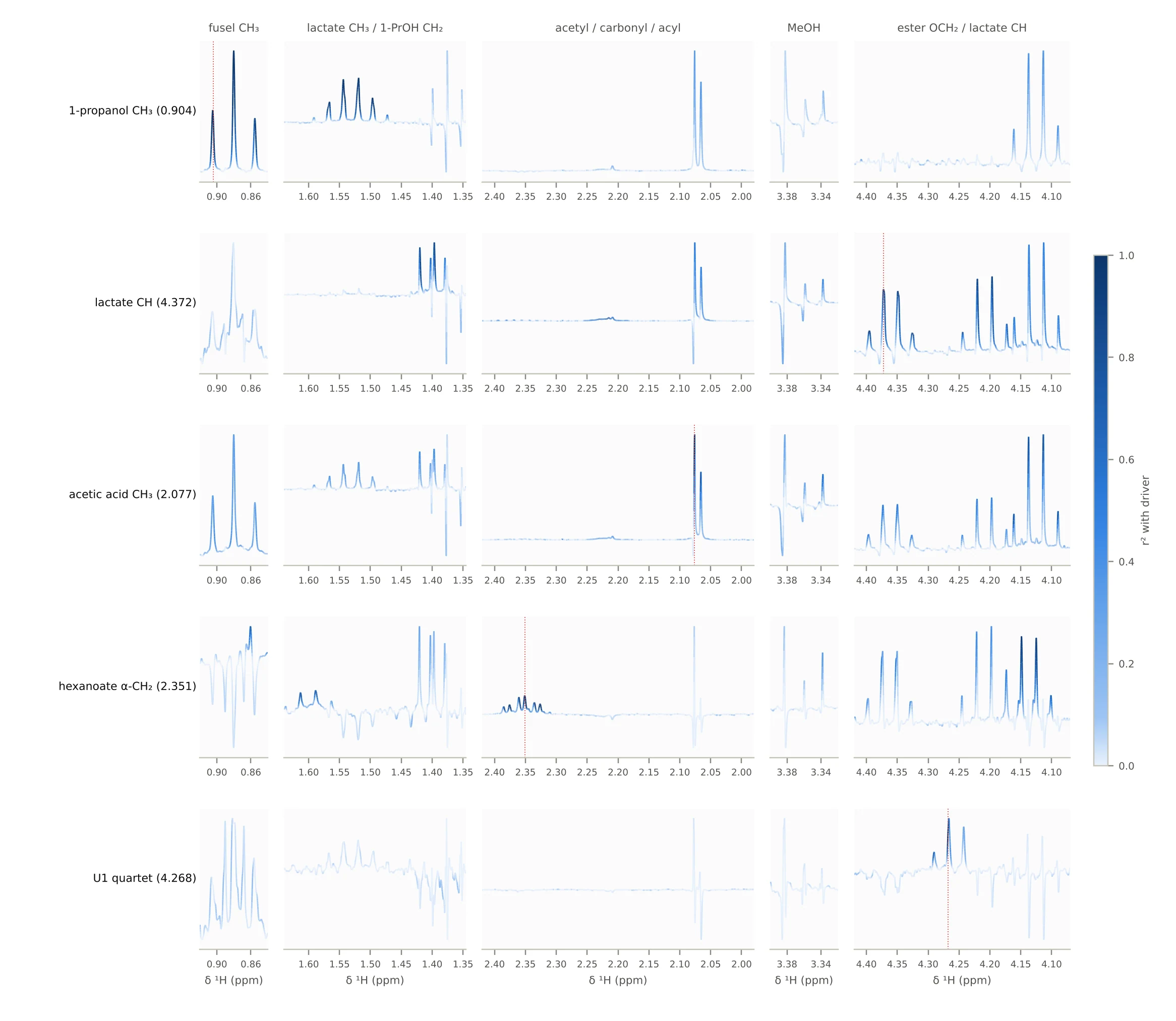
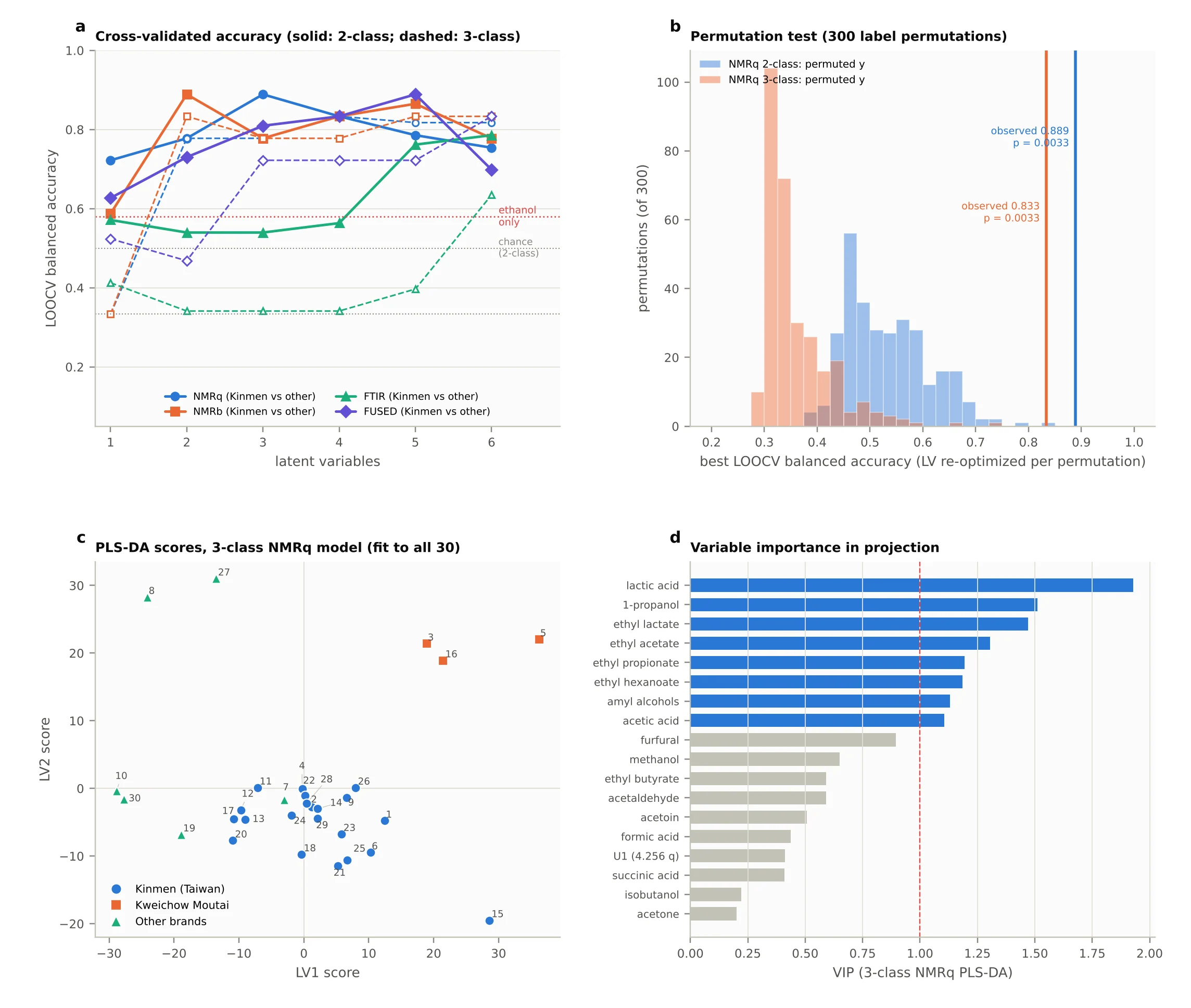
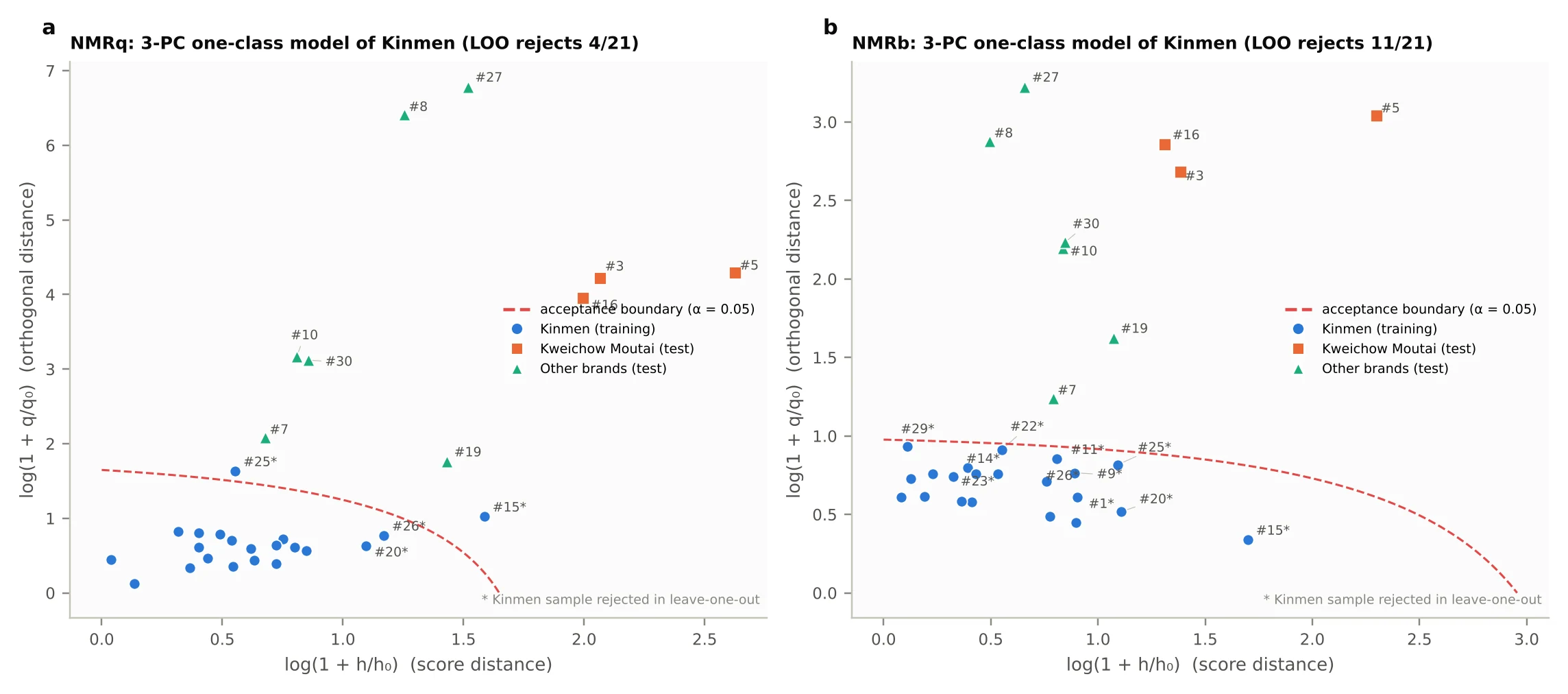
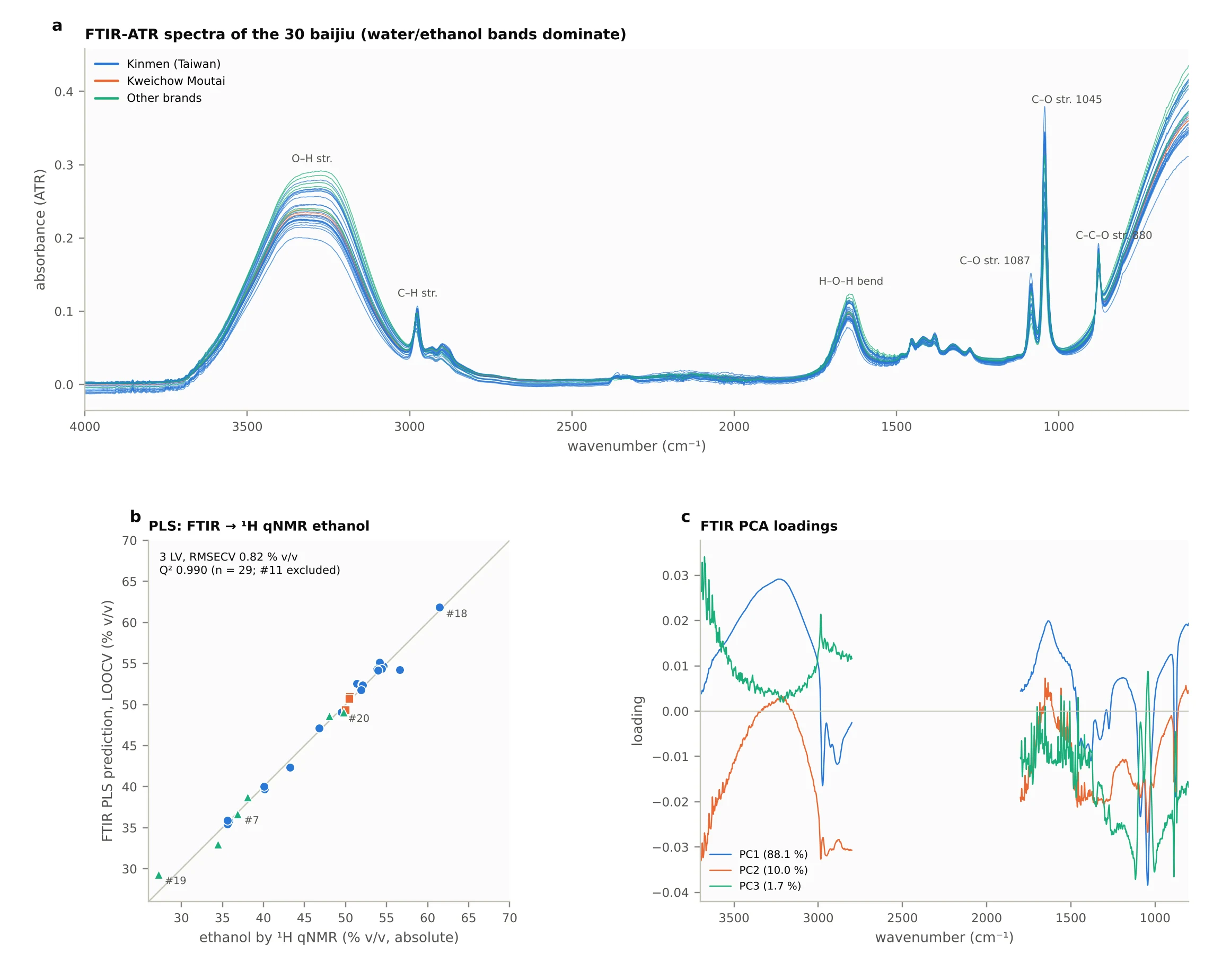
Principal component analysis, Ward clustering, t-SNE, UMAP, statistical total correlation spectroscopy, PLS-DA with permutation testing and a one-class DD-SIMCA model were applied to the fitted concentrations, to aligned spectral bins, to the FTIR spectra and to a fused block. The fitted and binned NMR representations produced identical five-cluster partitions (adjusted Rand index 1.00), STOCSY confirmed the spin-system assignments and corrected one of them, and PLS-DA separated Kinmen from the other brands with a cross-validated balanced accuracy of 0.889 (permutation p = 0.0033), against 0.58 for a classifier using ethanol content alone. The only persistent misclassifications, byejoe red (#7) and Vinn (#19), arise because a brand-defined “other” class is chemically heterogeneous, which argues for one-class models of authenticated styles. FTIR carried essentially ethanol information for classification purposes but quantified ethanol well (PLS RMSECV 0.82 % v/v). The small, unbalanced sample set, the presaturation and spinning artifacts and the unconfirmed provisional assignments are discussed critically, and an acquisition and validation program for a follow-up study is proposed.
Keywords: baijiu; ¹H qNMR; maleic acid internal standard; T₁ relaxation; congeners; Kinmen kaoliang; Kweichow Moutai; aroma type; PCA; PLS-DA; STOCSY; UMAP; t-SNE; HCA; DD-SIMCA; FTIR-ATR; authentication
Document details and provenance
| Document number | PNA-WP-2026-BAIJIU-01 |
| Version / date | 1.1 / 27 October 2026 (supersedes 1.0 / 26 October 2026) |
| Revision history | v1.0 (26 Oct 2026): first issue. v1.1 (27 Oct 2026): the absolute ethanol and mg/L scale was corrected for the preparation of the maleic acid solution (500 mg dissolved in 5.00 mL of D₂O, not made up to volume; 9.38 mg per tube instead of 10.0 mg) and for partial saturation of the maleic acid signal (T₁ = 6.1 s; 10 µs pulse with a 13 µs calibrated 90° pulse, i.e. 69°; 18.9 s repetition time); Sections 2.2, 5.2–5.4, 6.1, 6.3, 10.2, 10.3 and 11, the abstract, the summary, Tables 2 and 10 and Figure 4 were revised, Tables 5 and 6 and three references were added, and one tangential reference was removed. Concentrations on the absolute-alcohol basis, all multivariate results and all other conclusions are unchanged. |
| File name | PNA-WP-2026-BAIJIU-01_Baijiu_1H_qNMR_Chemometrics_v1.1.docx (PDF rendition with the same base name) |
| Prepared by | John C. Edwards, Ph.D., Process NMR Associates, LLC, 84 Patrick Lane, Ste 115, Poughkeepsie, NY 12603 |
| Data source | ¹H NMR (Varian Mercury, 300 MHz; raw FIDs recovered from the Mnova document “1H NMR - Baijiu - 30 Samples”, acquired 10–12 February 2020) and FTIR-ATR spectra of 30 commercial baijiu measured at PNA; product names, label strengths and database identifiers from the BTI baijiu list |
| Companion files | PNA-WP-2026-BAIJIU-01_Companion_Workbook_v1.1.xlsx (all inputs and outputs, live formulas); PNA-WP-2026-BAIJIU-01_Scores_Viewer_v1.1.html (interactive scores viewer) with its data workbook PNA-WP-2026-BAIJIU-01_Scores_Viewer_Data_v1.1.xlsx; PNA-WP-2026-BAIJIU-01_Code_v1.1.zip (Python and Node.js code with README) |
| AI model (as reported by the session) | claude-opus-5-5 (configured model identifier; the model serving any given turn may differ) |
| Generation date | 27 October 2026 (version 1.0: 26 October 2026) |
| Tools engaged | Python 3 (NumPy, SciPy, scikit-learn, umap-learn, matplotlib, adjustText, xlsxwriter); Node.js docx 9.8.1; LibreOffice (PDF rendering); CrossRef REST API (DOI, author and title verification); web search for product and regulatory facts |
| AI-assistance statement | Raw-data recovery, reprocessing, line fitting, quantitation, chemometric modeling, figures, tables and the draft text were produced with AI assistance (Claude) under the direction of J. C. Edwards. The NMR and FTIR measurements are PNA data. Every cited reference was verified before use: DOIs, authors and titles against CrossRef, and non-DOI items against the cited page or document; two product facts rest on secondary sources, identified as such in the companion workbook. Statements marked provisional or speculative require experimental confirmation, and the author’s own review of the spectra and conclusions supersedes the AI-drafted interpretation. |
The original report is distributed as PNA-WP-2026-BAIJIU-01_Baijiu_1H_qNMR_Chemometrics_v1.1.docx; this website edition reproduces its text, tables and figures page by page, with the interactive scores viewer as the final page.